
Repair estimate
~$1,500
Body shop quote for trip damage.
Turo hosts
A real host breakdown: guest damage, $500 recovered, ~$1,000 out of pocket, and why the 90% earnings plan is a risk bet—not just higher per-trip pay.
Last updated
Three months into hosting, my first real damage claim landed: about $1,500 in repairs, $500 recovered from the guest’s standard protection, and roughly $1,000 out of pocket on the 90% earnings plan ($2,750 damage responsibility).
I chose 90% for higher per-trip payout. That is a valid tradeoff—but only if you run the months-to-break-even math and keep cash reserves when something breaks.
This guide shares the numbers, what Turo’s 2026 plan structure means, and what I would tell a new host before picking a plan.
About three months into hosting, a guest damaged the car during a trip. I filed a claim, documented pickup and dropoff, and went through Turo’s resolution flow. The repair estimate came in around $1,500.
I’m on the 90% earnings plan—Turo’s More earnings option for US trips booked on or after January 7, 2026—so my damage responsibility is $2,750 per incident. The guest had standard protection on the trip. Turo’s resolution screen showed $500 paid from the guest side and noted I could not pursue the guest for additional costs beyond that process.
After the numbers settled, I was roughly $1,000 out of pocket. I chose 90% for higher per-trip payout. That tradeoff is real—but it feels different when you are staring at a repair quote instead of a spreadsheet.
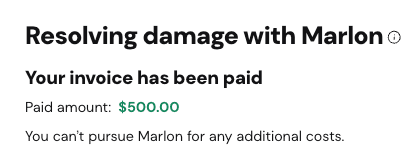
Round numbers from one incident—verify your own trip details in the app.
Repair estimate
~$1,500
Body shop quote for trip damage.
Guest recovery
$500
Amount shown on Turo resolution screen.
Host out-of-pocket
~$1,000
After guest recovery; excludes downtime and lost trips.
Plan responsibility
$2,750
90% / More earnings plan ceiling (US, 2026 structure).
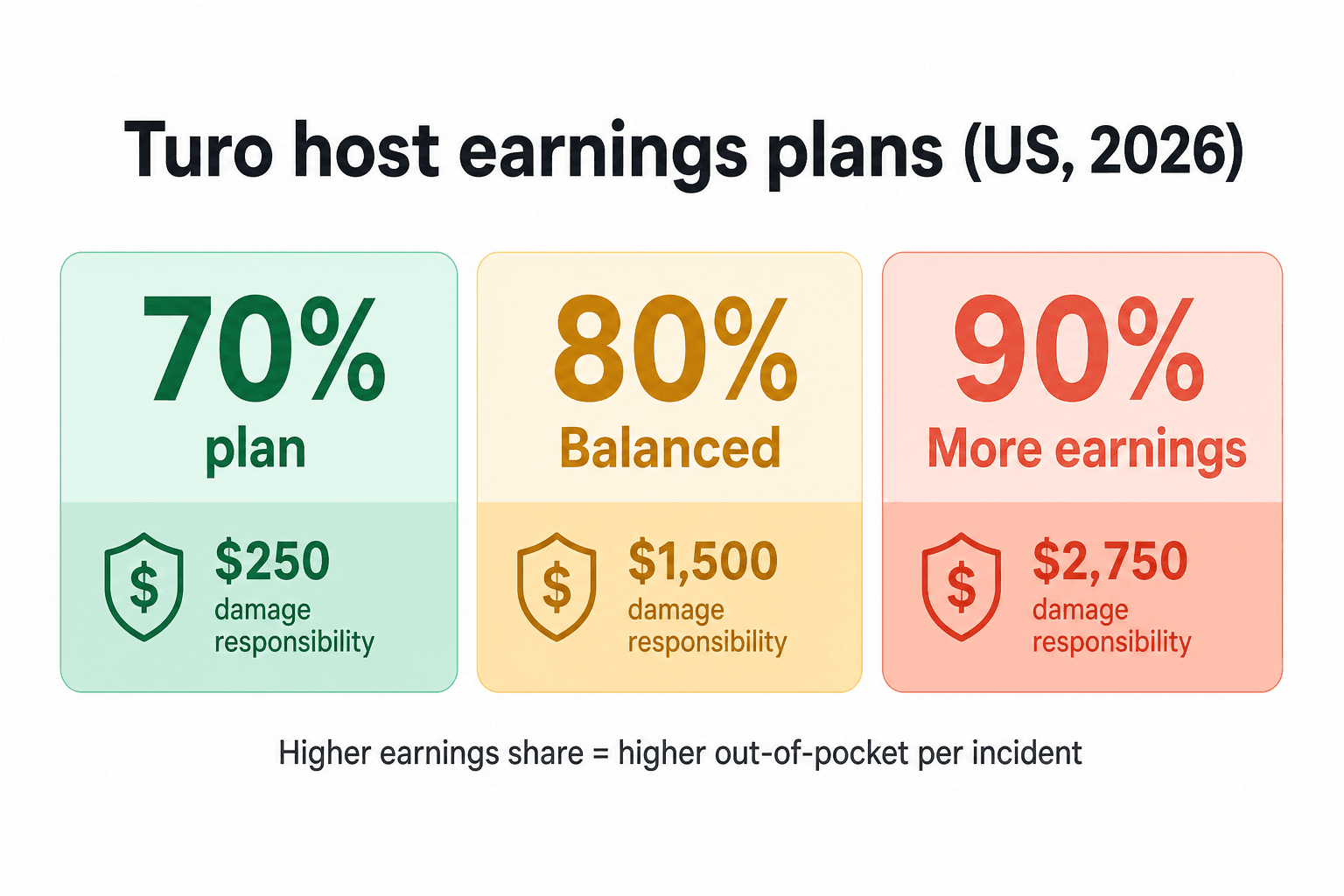
Turo simplified US host plans in early 2026. The tradeoff is consistent: higher trip share, higher damage responsibility. Turo publishes these thresholds in the Help Center—always confirm live terms for your market and booking date.
More peace of mind (70% host share) carries a $250 damage responsibility. Balanced (80%) carries $1,500. More earnings (90%) carries $2,750. Liability insurance limits and guest protection are separate layers—this article focuses on physical damage economics.
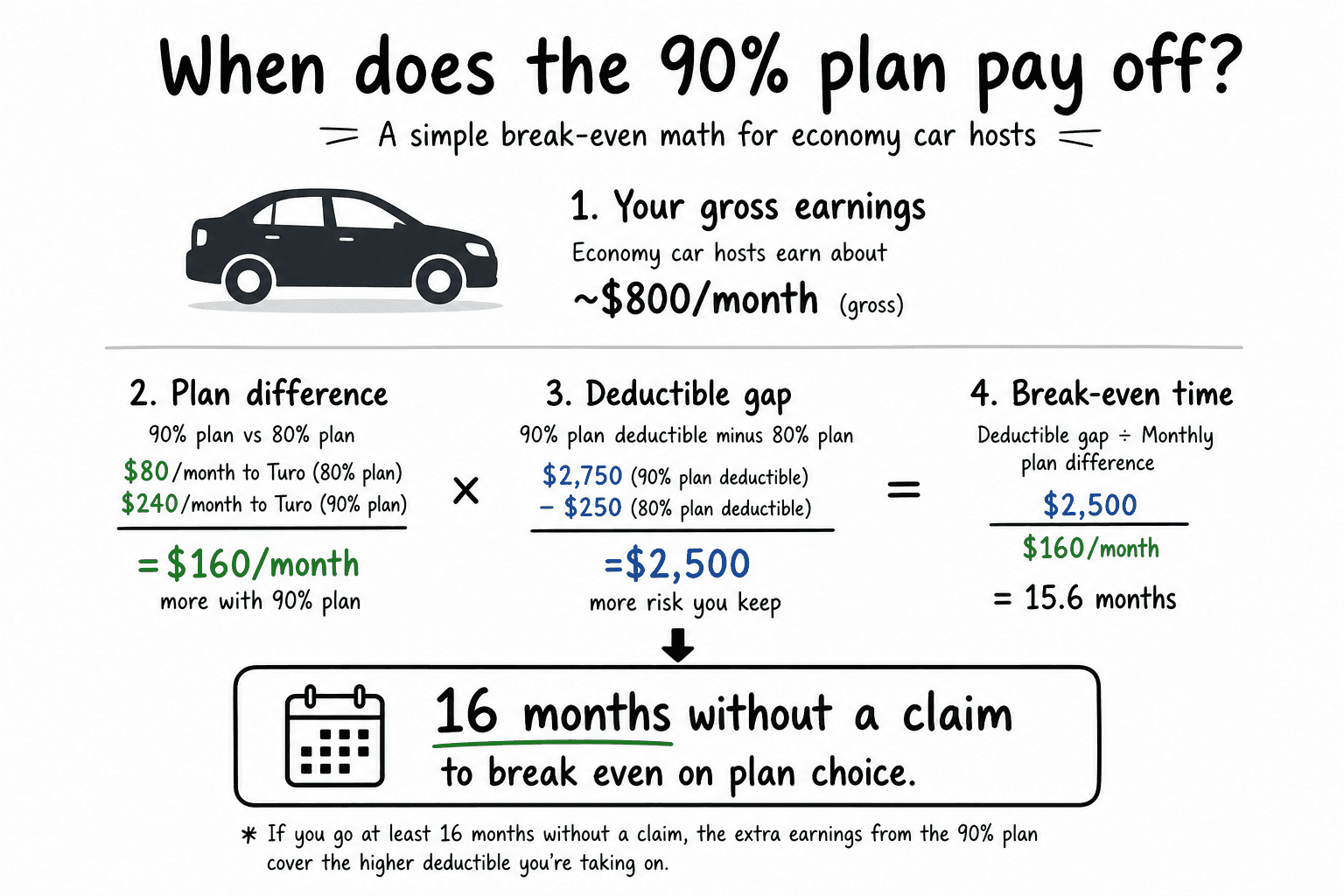
“On an economy car, you may need roughly 15–16 months without a deductible-worthy incident before the 90% plan beats the 70% plan on plan economics alone.”
After I shared this on Reddit, another host walked through the math more clearly than I had. Example: a car grossing about $800/month before the plan. On 90%, Turo’s take might be about $80/month; on 70%, about $240/month—a spread near $160/month in Turo’s favor on the lower plan.
The damage responsibility gap between 90% and 70% is $2,500 ($2,750 minus $250). Divide spread into gap: about 15–16 months with no deductible-worthy incident before 90% wins on plan choice alone.
On a higher-earning car—say ~$2,000/month gross—the monthly spread might be ~$400. Break-even drops to roughly seven months without a major incident. At that earnings level, 90% can make sense if you actually keep cash reserves.
Hosts often conflate guest protection on a trip with host earnings plan economics. They are different levers. Guest protection caps what Turo can recover from the guest for certain costs. Your earnings plan sets your damage responsibility framework with Turo.
That is why you can see a $1,500 repair, a $500 guest payment, and still owe roughly $1,000 as the host. It is not necessarily a claims-process error—it is the product structure showing up in one incident.
When I stacked depreciation, cleaning, time, a soft month, and this claim, I was not sure the car was net profitable at three months. Break-even on a good month, losing on a bad one. That is the part that made me want to quit—not filing the claim itself.
Use trailing monthly gross and count months to break even between 70% and 90%—not your best weekend.
If one incident would wreck your month, the highest share plan is probably the wrong flex.
Pickup and dropoff photos, interior, mileage, fuel, smells, existing wear. Claims are easier to file than to win economically.
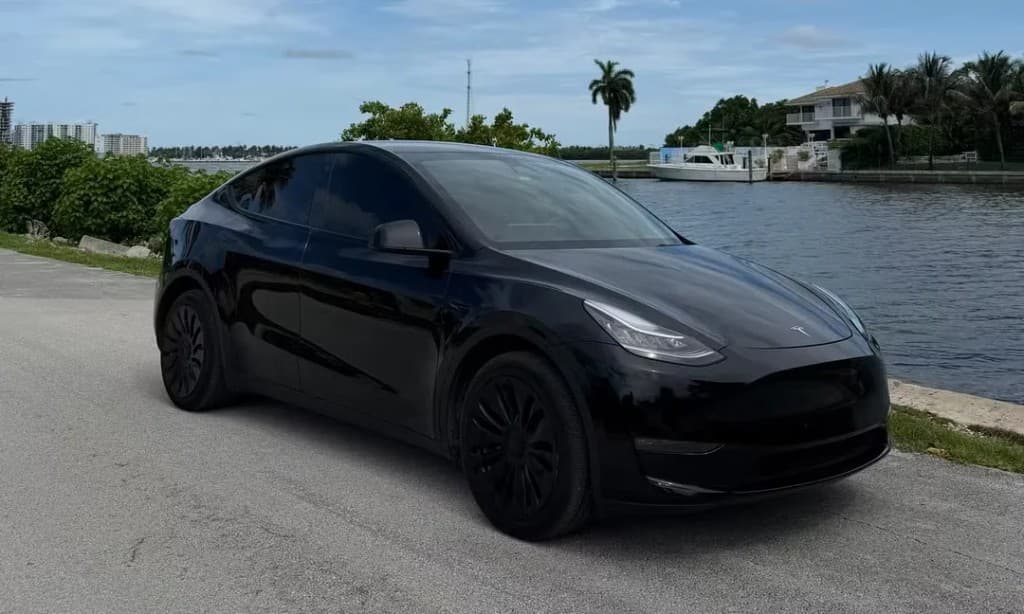
When demand dips, I worked on hero photos—light, recognizable backgrounds, wider framing—because clicks matter more when fewer guests search.
Not yet. I am pausing before a second car until I rerun the numbers on 70% vs 90% with real trailing data. If you are in the same spot, you are not necessarily bad at Turo—you might be learning risk math expensively, like I did.
If this helped, compare it with Turo’s official earnings plan pages linked below and talk to hosts in your market. Florida summer demand, airport delivery, and vehicle class all change the spreadsheet.
Turo photo size & crop safe zone
Hero framing when you refresh listing photos in a slow month.
Best photos for Turo bookings
Capture-first workflow before presentation cleanup.
Turo listing photos on Shoturo
Background and lighting on real uploads when capture is solid.
Turo photo guide
Official angles, crop rules, gallery order, and refresh workflow.
Turo listing photos
When to refresh real listing photos with Shoturo.
Best AI photo editors for Turo hosts
Compare Shoturo, PhotoRoom, MotorCut, Autofox, and more for real listing photos.
Turo listing photo checklist
Step-by-step capture checklist before you edit.
Click-through and bookings
Why thumbnail clarity affects listing opens.
Photo mistakes that cost clicks
Common presentation issues hosts fix first.
Background cleanup for Turo
When to improve scene and light on real photos.
Car background remover
Remove or replace weak backgrounds on real vehicle uploads.
Autofox alternative for hosts
Single-vehicle Turo workflow vs dealer stacks.
Free PDF checklist
Downloadable 12-point host checklist.
Earnings plans in detail (US hosts)
70%, 80%, and 90% host share with damage responsibility thresholds.
Vehicle protection / earnings plans
More peace of mind, Balanced, and More earnings plan overview.
Insurance & protection at Turo
How host plans and guest protection interact on trips.
Turo listing photos guide (Help Center)
Official angles, crop guidance, and prohibited photo types.
FAQs
For US trips booked on or after January 7, 2026, Turo’s More earnings (90%) plan lists a $2,750 damage responsibility per incident—your out-of-pocket exposure before reimbursement rules apply. Verify current terms in the Help Center for your market.
Guest protection level on the trip caps what Turo can collect from the guest side. Standard protection on a trip can limit recovery even when repair costs are higher—separate from which host earnings plan you chose.
Only if you have reserves to absorb a deductible-sized hit and your monthly gross makes the plan spread worth it. Many economy-car hosts break even on plan choice over roughly 15–16 months only if they avoid deductible-worthy incidents.
After you shoot
Shoturo is built by a Turo host for background cleanup, lighting, and crop-safe exports.